
In today’s fast-paced business environment, staying organized is no longer optional – it is essential. Whether you operate a small startup, a growing service company, or an established business, your financial records play a critical role in every decision you make. From tracking revenue and expenses to preparing for taxes and securing financing, organized financial information provides the clarity needed to manage and grow a successful business.
Unfortunately, many businesses still rely on scattered spreadsheets, paper receipts, disconnected systems, and outdated filing methods. While these approaches may seem manageable in the short term, they often create confusion, inefficiencies, and unnecessary stress as the business grows. This is where digital financial organization becomes invaluable.
Digital financial organization is more than simply storing files on a computer. It involves creating structured systems for managing invoices, receipts, bank records, expense reports, payroll information, tax documents, and financial statements. When implemented properly, these systems save time, improve accuracy, strengthen compliance, and provide business owners with better visibility into their financial performance.
Why Financial Organization Matters
Every business decision depends on accurate financial information. If records are incomplete, disorganized, or difficult to access, business owners may struggle to answer critical questions such as:
- How profitable is the business?
- Which expenses are increasing?
- How much cash is available?
- Which products or services generate the most profit?
- Are taxes being calculated correctly?
- Is the business growing sustainably?
Without organized records, even simple financial tasks become time-consuming and frustrating. Important information can be overlooked, leading to costly mistakes and missed opportunities.
Digital organization creates a foundation for reliable bookkeeping and better decision-making.
The Challenges of Poor Financial Organization
Disorganized financial records often create problems that extend far beyond bookkeeping.
Common issues include:
Lost Documents
Businesses frequently lose receipts, invoices, contracts, or payment records when information is stored across multiple locations. Missing documentation can create problems during audits, tax filing, or financial reviews.
Inefficient Processes
Employees spend valuable time searching for files, verifying information, and correcting errors when systems are not organized.
Cash Flow Confusion
Without proper financial tracking, businesses may struggle to understand incoming and outgoing cash, leading to budgeting challenges and unexpected shortages.
Compliance Risks
Tax authorities and regulatory agencies require accurate financial documentation. Poor record management increases the risk of penalties, audits, and compliance issues.
Limited Business Insight
When financial information is difficult to access or analyze, business owners lose the ability to make informed decisions based on real data.
The Benefits of Digital Financial Organization
Implementing digital systems creates significant advantages for businesses of all sizes.
Improved Accuracy
Digital records reduce manual errors and ensure that financial information is stored consistently and accurately.
Faster Access to Information
Invoices, receipts, reports, and financial statements can be retrieved within seconds rather than searching through filing cabinets or multiple spreadsheets.
Better Cash Flow Management
Organized financial data provides a clearer picture of cash inflows and outflows, helping businesses manage working capital more effectively.
Enhanced Collaboration
Digital systems allow accountants, bookkeepers, managers, and business owners to access information securely and efficiently.
Simplified Tax Preparation
Tax season becomes significantly less stressful when financial records are organized throughout the year. Instead of scrambling to gather documents, businesses can access everything they need immediately.
Stronger Compliance
Accurate recordkeeping helps businesses meet tax, payroll, and regulatory requirements while reducing the risk of errors or penalties.
Key Components of Digital Financial Organization
Successful digital bookkeeping starts with building strong organizational habits.
Organize Invoices
Maintain a centralized system for all customer invoices and supplier bills. Categorize documents consistently and store them in clearly labeled folders.
Track Expenses Digitally
Use accounting software or expense management tools to record expenses in real time. Upload receipts immediately to prevent loss or misclassification.
Separate Business and Personal Finances
One of the most common bookkeeping mistakes is mixing personal and business transactions. Maintaining separate accounts simplifies recordkeeping and improves financial accuracy.
Store Documents Securely
Financial records should be stored in secure cloud-based systems with proper backup procedures. This protects important information from loss, theft, or hardware failure.
Reconcile Accounts Regularly
Monthly bank reconciliations ensure that financial records match actual account activity and help identify discrepancies early.
Maintain Consistent Categories
Using standardized categories for income and expenses improves reporting accuracy and makes financial analysis easier.
How Digital Organization Supports Business Growth
As businesses grow, financial complexity increases. More customers, vendors, employees, and transactions create additional administrative demands.
Without scalable systems, growth can quickly overwhelm existing processes.
Digital organization supports growth by:
- Improving operational efficiency
- Reducing administrative workload
- Enhancing reporting capabilities
- Supporting budgeting and forecasting
- Strengthening financial control
- Providing better visibility into performance
Businesses with organized financial systems can focus more time on serving customers, developing products, and expanding operations rather than managing paperwork.
The Role of Bookkeeping in Financial Organization
Bookkeeping serves as the engine behind financial organization.
Professional bookkeeping ensures that:
- Transactions are recorded accurately
- Accounts are reconciled regularly
- Financial reports remain current
- Tax obligations are tracked properly
- Business performance is monitored consistently
When bookkeeping and digital organization work together, businesses gain a reliable financial framework that supports informed decision-making.
Small Habits Create Big Results
One of the most important lessons in financial organization is that consistency matters more than complexity.
Simple habits can produce significant long-term benefits:
- Upload receipts immediately
- Review expenses weekly
- Reconcile accounts monthly
- Organize invoices systematically
- Monitor financial reports regularly
- Back up important records
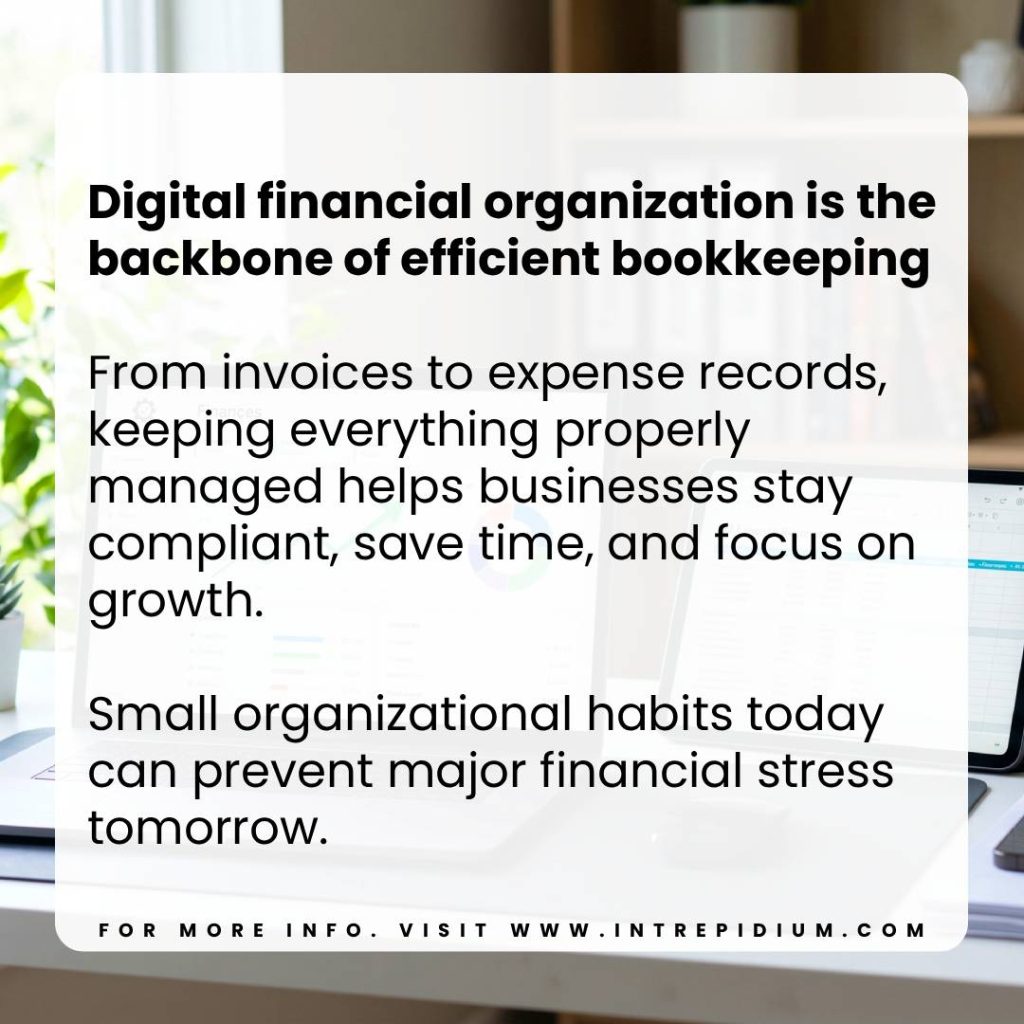
These small actions help prevent larger financial problems later.
Many businesses only focus on organization during tax season or when problems arise. However, maintaining organized records throughout the year reduces stress, improves efficiency, and creates a stronger financial foundation.
Looking Ahead
Digital financial organization is not just about keeping records neat. It is about creating clarity, control, and confidence in your business operations.
When financial information is organized and accessible, business owners can make faster decisions, identify opportunities, manage risks, and plan for future growth with greater confidence.
The most successful businesses understand that financial organization is an ongoing process rather than a one-time task. By investing in strong digital systems and consistent bookkeeping practices today, companies can avoid costly challenges tomorrow.
At Intrepidium Consulting Inc., we help businesses build efficient bookkeeping systems that improve organization, strengthen compliance, and support sustainable growth. Because when your financial records are organized, your business is better positioned to succeed.
