
Many business owners focus heavily on sales numbers. Growing revenue feels exciting, and increasing sales often appears to be the clearest sign of success. However, strong sales alone do not always translate into strong profits. A company can generate impressive revenue while still struggling financially behind the scenes. That is why understanding your gross profit margin is one of the most important steps in evaluating the true health of your business.
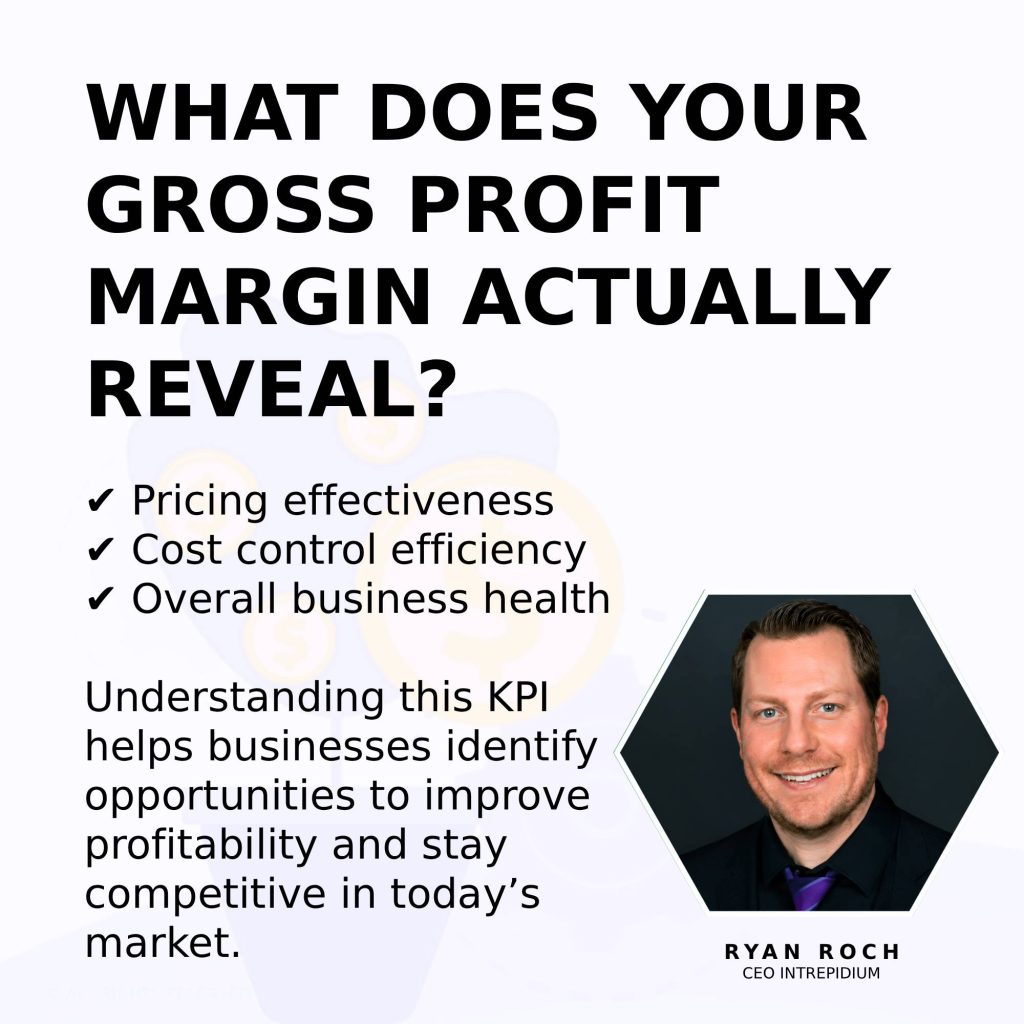
Gross profit margin is more than just an accounting metric. It is a powerful financial indicator that reveals how efficiently your business is operating, how effectively you price your products or services, and whether your costs are under control. Businesses that regularly monitor their gross profit margin gain clearer insight into profitability, sustainability, and future growth opportunities.
At Intrepidium Consulting Inc., we believe that business owners should understand the story behind their numbers. When you understand your gross profit margin, you can make smarter decisions that support long-term success.
What Is Gross Profit Margin?
Gross profit margin measures how much money remains after subtracting the direct costs associated with producing goods or delivering services. These direct costs are commonly referred to as the cost of goods sold (COGS).
The formula is simple:
Gross Profit Margin = (Revenue – Cost of Goods Sold) ÷ Revenue × 100
For example, if your business earns $100,000 in revenue and your direct costs total $60,000, your gross profit is $40,000. This means your gross profit margin is 40%.
That 40% represents the percentage of revenue left over to cover operating expenses, taxes, salaries, marketing, rent, and profit.
A healthy gross profit margin gives your business room to grow, invest, and remain financially stable.
Why Gross Profit Margin Matters
Many businesses only look at total revenue when evaluating performance. While revenue is important, it does not provide the complete financial picture.
Gross profit margin helps answer critical questions such as:
- Are your products or services priced properly?
- Are production costs increasing too quickly?
- Are suppliers affecting profitability?
- Is your business operating efficiently?
- Can your current pricing support long-term growth?
Without monitoring gross profit margin, businesses can unknowingly lose profitability even while sales increase.
Pricing Effectiveness
One of the biggest insights gross profit margin reveals is pricing effectiveness.
If your prices are too low, your business may struggle to generate enough profit despite high sales volume. Many businesses make the mistake of competing primarily on price without fully understanding how lower pricing affects profitability.
When gross profit margins decline, it may indicate that your pricing strategy needs adjustment.
This does not always mean raising prices dramatically. Sometimes it means:
- Improving service value
- Offering premium packages
- Eliminating unnecessary discounts
- Repositioning products
- Increasing efficiency to protect margins
Businesses that understand their margins can price with confidence rather than relying on guesswork.
Cost Control Efficiency
Gross profit margin also highlights how efficiently your business manages direct costs.
Rising supplier costs, waste, inefficient production, inventory issues, or labor inefficiencies can slowly erode profitability. Without proper monitoring, these issues often go unnoticed until financial pressure becomes severe.
For example:
- A restaurant may experience rising food costs.
- A contractor may underestimate material expenses.
- A retail business may struggle with supplier pricing increases.
- A service business may spend too many labor hours on low-profit projects.
Tracking gross profit margin regularly helps identify these problems early so corrective action can be taken before profits suffer significantly.
Overall Business Health
Gross profit margin acts as a strong indicator of overall business health.
Healthy margins usually indicate:
- Strong operational systems
- Effective pricing
- Controlled expenses
- Sustainable business practices
Declining margins, on the other hand, may signal:
- Poor financial management
- Excessive discounting
- Increasing production costs
- Inefficient operations
- Weak strategic planning
Business owners who consistently review this KPI can spot trends early and make proactive decisions rather than reacting during financial emergencies.
Gross Profit Margin and Growth Planning
Growth requires more than increasing sales. Businesses need profitable growth.
If margins are weak, scaling operations can actually create larger financial problems. More sales without healthy margins often lead to:
- Cash flow shortages
- Increased debt
- Operational stress
- Burnout
- Reduced profitability
Understanding gross profit margin helps businesses grow strategically. It allows owners to:
- Forecast profitability accurately
- Plan hiring decisions
- Set realistic financial goals
- Invest confidently
- Build sustainable expansion plans
A business with strong margins has greater flexibility and resilience during economic uncertainty.
Industry Benchmarks Matter
Gross profit margins vary between industries. A retail company may operate with lower margins than a consulting business, while manufacturing businesses may face entirely different cost structures.
That is why comparing your margin against industry benchmarks can provide valuable context.
However, comparing yourself to competitors is only part of the equation. The more important goal is improving your own financial efficiency over time.
Consistent improvement in margins often reflects stronger operations and better decision-making.
Common Mistakes Businesses Make
Many businesses unintentionally damage their margins through avoidable mistakes such as:
Ignoring Small Cost Increases
Minor increases in expenses may seem harmless individually, but over time they significantly impact profitability.
Over-Discounting
Frequent discounts can reduce perceived value while shrinking profits.
Poor Expense Tracking
Without organized bookkeeping, businesses often fail to identify where profits are disappearing.
Underpricing Services
Many service-based businesses price based on competitors rather than actual costs and profitability goals.
Failing to Review Financial Reports
Financial reports should guide business decisions regularly, not just during tax season.
How Better Bookkeeping Supports Margin Analysis
Accurate bookkeeping is essential for understanding gross profit margin correctly.
Disorganized records create unreliable financial reports, making it difficult to:
- Track direct costs
- Analyze profitability
- Monitor trends
- Make informed decisions
Professional bookkeeping helps businesses maintain accurate records and generate reliable financial insights.
At Intrepidium Consulting Inc., we help businesses organize financial systems, monitor KPIs, and gain clarity over their numbers so they can focus on growth with confidence.
Final Thoughts
Gross profit margin is one of the clearest indicators of business performance. It reveals whether your pricing works, whether costs are under control, and whether your business model is sustainable.
Sales numbers alone cannot tell the full story. Strong businesses understand both revenue and profitability.
When you consistently monitor your gross profit margin, you gain the ability to make smarter decisions, improve efficiency, strengthen profitability, and plan confidently for the future.
The better you understand your margins, the better you understand your business.
And when you understand your business clearly, you position yourself for stronger, more sustainable growth.
