
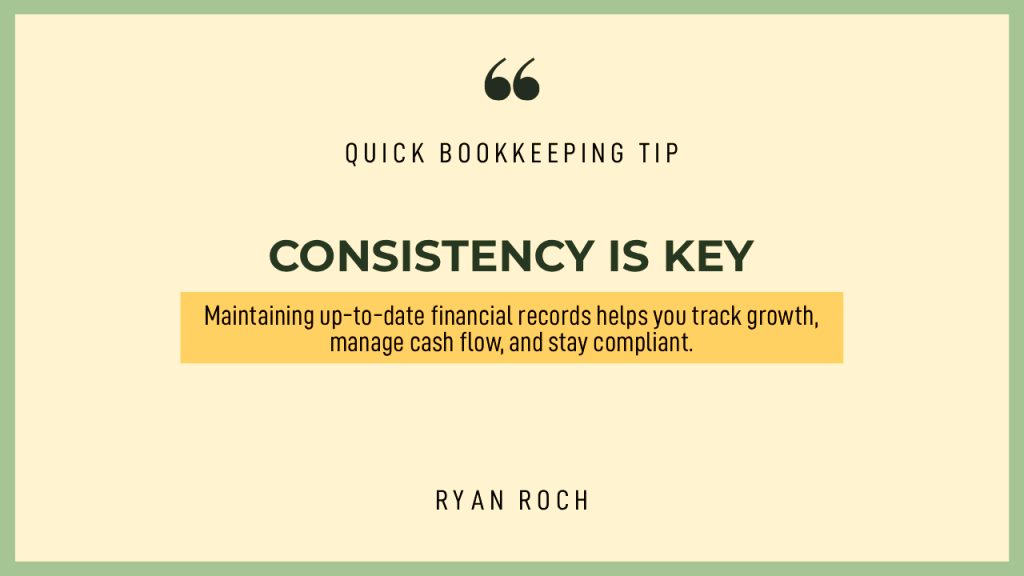
In the fast-paced world of small business, owners often juggle multiple responsibilities – sales, customer service, marketing, and operations. With so much happening every day, bookkeeping can easily fall to the bottom of the priority list. However, one simple principle can transform your financial management and reduce stress: consistency. Maintaining up-to-date financial records helps you track growth, manage cash flow, and stay compliant. When done regularly, bookkeeping becomes easier, more accurate, and far less overwhelming. 📊
Consistency in bookkeeping means recording financial transactions frequently rather than waiting until the end of the month or quarter. Small daily or weekly updates prevent the buildup of unrecorded data. This habit ensures your books reflect the real-time financial health of your business. Instead of guessing your numbers, you’ll always have a clear understanding of where your business stands.
Building a Routine of Consistency
One of the biggest benefits of consistent bookkeeping is improved cash flow management. Cash flow is the lifeline of any small business. Without proper tracking, you may not realize when expenses are increasing or when payments are overdue. By updating your records regularly, you can monitor incoming revenue and outgoing expenses. This allows you to anticipate shortfalls, plan for upcoming costs, and avoid financial surprises. 💡
Another advantage is better decision-making. Accurate and current financial data provides valuable insights into your business performance. You can quickly identify which products or services are profitable, where you might be overspending, and whether your business is growing as expected. These insights help you make smarter strategic decisions. Instead of relying on assumptions, you’ll be guided by reliable financial information.
Consistency also reduces stress during tax season. Many small business owners experience anxiety when preparing taxes because their records are incomplete or disorganized. Searching for receipts, reconciling accounts, and correcting errors can take hours – or even days. When bookkeeping is done consistently, everything is already organized. Your financial reports are ready, your expenses are categorized, and your documentation is complete. This not only saves time but also reduces the risk of mistakes or missed deductions. 🧾
Staying compliant with financial regulations is another critical reason to maintain consistent records. Governments and regulatory bodies require businesses to keep accurate financial documentation. Inconsistent bookkeeping increases the risk of errors, which could lead to penalties or audits. Regular updates ensure that your records remain compliant and ready for review if needed.
Building consistency doesn’t require a significant time commitment. Even 10–15 minutes each day can make a difference. You can start by adopting simple habits such as recording daily sales, logging expenses, reviewing bank transactions, and categorizing entries. These small actions prevent tasks from piling up and make bookkeeping manageable.
Technology can also support consistent bookkeeping. Modern accounting software allows you to automate recurring transactions, connect bank accounts, and generate reports instantly. Mobile apps enable you to upload receipts on the go. These tools simplify the process and reduce manual work, making it easier to stay consistent.
Financial expert Ryan Roch emphasizes the importance of maintaining updated records, noting that consistent bookkeeping helps businesses track growth, manage cash flow, and remain compliant. This insight highlights how small efforts today can prevent major financial challenges tomorrow.
Consistency in bookkeeping also improves collaboration with accountants or financial advisors. When your records are organized, professionals can provide better guidance. They can analyze trends, suggest tax-saving opportunities, and help you plan for expansion. Without consistent records, their ability to offer strategic advice is limited.
Additionally, regular bookkeeping builds confidence. Knowing that your financial data is accurate allows you to focus on growing your business rather than worrying about hidden issues. Whether you’re applying for funding, negotiating with suppliers, or planning investments, up-to-date financial information strengthens your position.
Many small businesses struggle with bookkeeping because they view it as a complex or time-consuming task. However, consistency turns it into a simple routine. Instead of tackling months of data at once, you manage small pieces regularly. Over time, this approach saves hours and prevents frustration.
Consistency also helps identify problems early. If expenses suddenly increase or revenue declines, you’ll notice quickly. Early detection allows you to adjust your strategy before issues escalate. This proactive approach can protect your business from financial instability.
In conclusion, consistency is the foundation of effective bookkeeping. Maintaining up-to-date financial records helps you track growth, manage cash flow, stay compliant, and reduce stress. Small daily updates prevent big financial headaches later. By building a consistent routine, leveraging technology, and focusing on accuracy, small business owners can take control of their finances and make smarter decisions. 📈
Start today with a simple habit – record your transactions regularly. Over time, this small step will create a strong financial foundation, support your business growth, and ensure smoother operations. Consistency truly is the key to long-term success.
