Running a successful business involves much more than generating sales. While revenue is important, long-term profitability depends on understanding where your money comes from, where it goes, and how effectively your business converts income into profit. Many business owners focus on day-to-day operations and customer service but overlook one of the most powerful management tools available to them – their financial reports.
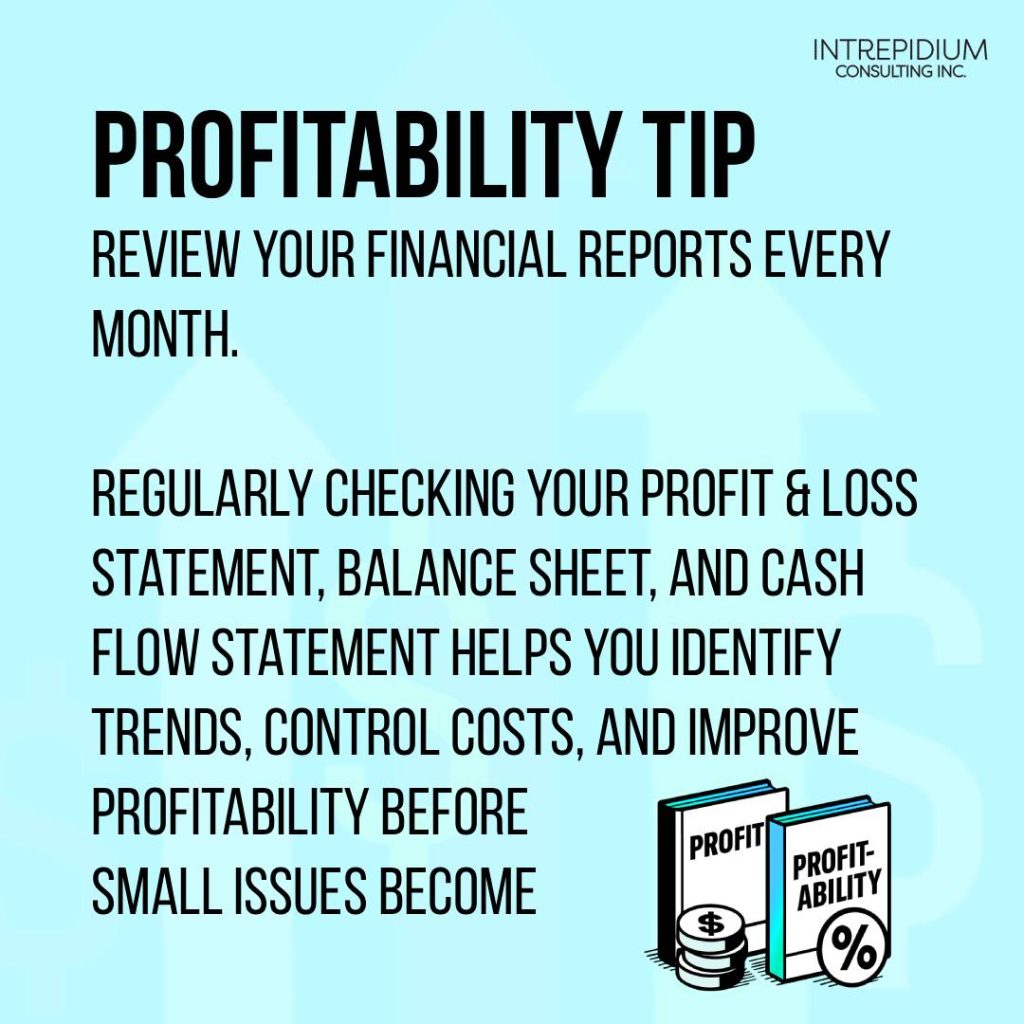
The simple habit of reviewing your financial reports every month can transform the way you manage your business. Instead of reacting to financial problems after they occur, monthly financial reviews allow you to identify trends, control costs, improve cash flow, and make informed decisions before small issues become major challenges.
At Intrepidium Consulting Inc., we encourage business owners to treat their financial reports as strategic planning tools rather than paperwork prepared only for tax season. Understanding your numbers each month gives you the clarity needed to build a stronger, more profitable business.
Why Monthly Financial Reviews Matter
Many entrepreneurs only look at their financial statements when preparing taxes or applying for financing. Unfortunately, this means valuable information goes unused throughout the year.
Financial reports provide an accurate picture of your business performance. Reviewing them monthly helps answer important questions such as:
- Is the business making money?
- Are expenses increasing?
- Is cash flow healthy?
- Are profit margins improving?
- Which products or services are the most profitable?
- Are there warning signs that need immediate attention?
Waiting until year-end to answer these questions often means lost opportunities and avoidable financial problems.
Monthly reviews allow business owners to make adjustments while there is still time to improve results.
The Three Financial Reports Every Business Should Review
1. Profit and Loss Statement (Income Statement)
The Profit and Loss (P&L) Statement summarizes your business income and expenses over a specific period.
It shows:
- Total revenue
- Cost of goods sold
- Gross profit
- Operating expenses
- Net profit
The P&L tells you whether your business is profitable and helps identify trends in sales and spending.
For example, if revenue is increasing but profits remain unchanged, your expenses may be growing too quickly. Monthly reviews help identify these issues before they affect long-term profitability.
Business owners should compare each month’s results against previous months and budgets to identify positive or negative trends.
2. Balance Sheet
While the Profit and Loss Statement measures performance over time, the Balance Sheet provides a snapshot of your business at a specific point.
It summarizes:
- Assets
- Liabilities
- Owner’s equity
This report answers important questions such as:
- How much cash does the business have?
- How much money is owed to suppliers?
- How much debt exists?
- What assets does the business own?
A strong Balance Sheet reflects financial stability and provides valuable information for lenders, investors, and business owners alike.
Regular review helps ensure that assets continue to grow while liabilities remain manageable.
3. Cash Flow Statement
Many profitable businesses still experience financial stress because they lack sufficient cash.
The Cash Flow Statement explains how money moves into and out of the business.
It tracks cash generated from:
- Operating activities
- Investing activities
- Financing activities
Cash flow determines whether a business can:
- Pay employees
- Purchase inventory
- Cover operating expenses
- Invest in growth
- Meet loan obligations
Monthly cash flow reviews help identify shortages before they become emergencies.
Positive cash flow provides flexibility, while poor cash flow often limits growth opportunities.
Identify Trends Before They Become Problems
One of the greatest advantages of monthly financial reviews is trend analysis.
Looking at a single month’s performance provides useful information, but comparing several months reveals patterns that might otherwise go unnoticed.
For example, you may discover:
- Gradually increasing operating expenses
- Declining gross profit margins
- Seasonal revenue fluctuations
- Rising payroll costs
- Slower customer payments
- Increasing inventory costs
Recognizing these trends early allows business owners to respond proactively rather than react after profitability has declined.
Improve Cost Control
Expense management is one of the fastest ways to improve profitability.
Monthly financial reports help identify areas where spending has increased unexpectedly.
Common opportunities include:
- Subscription services no longer being used
- Rising utility costs
- Vendor price increases
- Excess inventory purchases
- Marketing campaigns with poor returns
- Administrative expenses that can be reduced
Even modest reductions in unnecessary expenses can significantly improve overall profitability.
The goal is not simply to spend less – but to spend more strategically.
Measure Business Performance
Financial reports also help entrepreneurs evaluate whether their business strategies are producing results.
Questions to ask each month include:
- Did revenue increase compared to last month?
- Are profit margins improving?
- Which services generate the highest return?
- Which expenses provide the greatest value?
- Are financial goals being achieved?
Monthly reporting transforms financial data into measurable performance indicators.
Without measurement, improvement becomes difficult.
Support Better Decision-Making
Every major business decision should be supported by reliable financial information.
Whether hiring employees, expanding operations, purchasing equipment, or launching new products, financial reports provide the data needed to evaluate opportunities objectively.
Business owners who review financial reports regularly make decisions with greater confidence because those decisions are supported by facts rather than assumptions.
Strengthen Cash Flow Management
Cash flow problems rarely appear overnight.
Most develop gradually through:
- Late customer payments
- Increasing operating costs
- Poor inventory management
- Unexpected expenses
Monthly cash flow reviews help identify warning signs early.
Simple adjustments – such as improving collections, negotiating payment terms, or delaying discretionary spending—can prevent larger financial challenges.
Healthy cash flow also provides greater flexibility to invest in growth opportunities as they arise.
Establish a Monthly Financial Review Routine
Consistency is key.
Set aside time each month to review your financial reports carefully.
During your review:
- Compare revenue with previous months.
- Analyze major expense categories.
- Review gross and net profit margins.
- Monitor cash flow.
- Examine accounts receivable.
- Review outstanding liabilities.
- Compare actual results against your budget.
- Identify action items for improvement.
These meetings do not need to be lengthy. Even dedicating one hour each month can significantly improve financial awareness.
Partner with Financial Professionals
Many business owners understand the importance of financial reporting but lack the time or expertise to interpret the data effectively.
Working with experienced bookkeeping and accounting professionals ensures your reports are accurate, timely, and meaningful.
Professional advisors can help:
- Explain financial trends
- Identify areas for improvement
- Improve budgeting
- Strengthen cash flow
- Support strategic planning
- Ensure accurate reporting
Rather than simply producing reports, experienced financial professionals help transform numbers into practical business insights.
Final Thoughts
Profitability is not achieved by chance – it is built through consistent financial awareness and informed decision-making.
Reviewing your Profit and Loss Statement, Balance Sheet, and Cash Flow Statement every month gives you the information needed to monitor performance, control costs, improve cash flow, and identify opportunities for growth before small issues become significant problems.
Businesses that understand their financial reports are better equipped to adapt to changing market conditions, make confident decisions, and build sustainable success.
At Intrepidium Consulting Inc., we believe that monthly financial reviews are one of the most valuable habits a business owner can develop. Accurate reporting, expert analysis, and proactive financial management provide the clarity and confidence needed to improve profitability and achieve long-term business growth. By making financial reviews part of your monthly routine, you’re not just tracking your business – you’re actively shaping its future.