
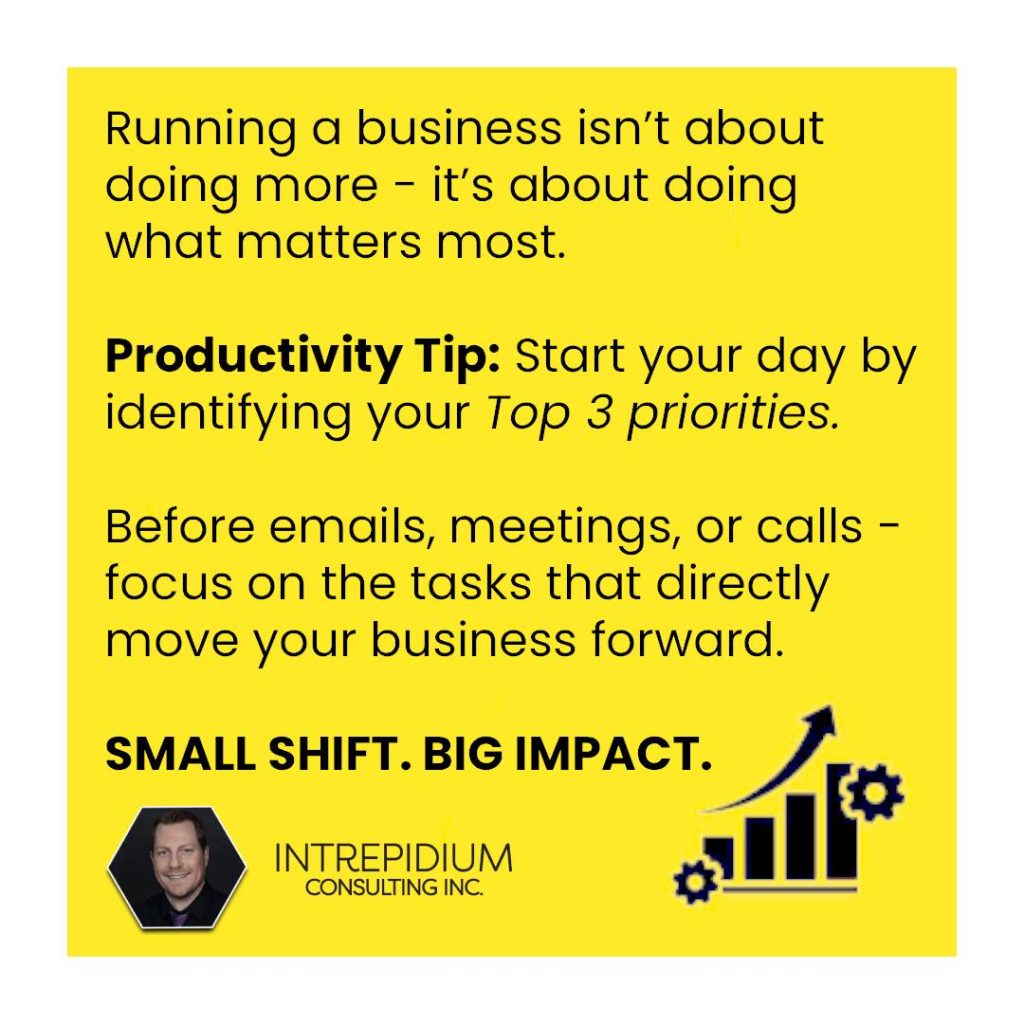
Running a business often feels like an endless list of responsibilities. Emails pile up, meetings fill the calendar, calls demand attention, and unexpected problems appear daily. Many business owners spend their days constantly busy but still feel like meaningful progress is slow. The truth is, productivity is not about doing more – it’s about doing what matters most.
One of the most effective productivity habits for business leaders is identifying the top three priorities for the day before getting pulled into distractions. This small shift can create a major impact on focus, decision-making, and long-term business growth.
The Problem with “Always Busy”
In today’s fast-paced environment, being busy is often mistaken for being productive. However, there is a major difference between activity and progress. A packed schedule does not automatically mean your business is moving forward.
Many entrepreneurs spend hours:
- Responding to emails
- Attending unnecessary meetings
- Handling low-priority tasks
- Reacting to constant notifications
- Solving issues that could be delegated
At the end of the day, they may feel exhausted but realize they accomplished very little that actually contributed to growth.
The challenge is not usually a lack of effort – it’s a lack of focus.
Why Prioritization Matters
Every business owner has limited time, energy, and attention. Prioritization ensures those resources are directed toward the activities that create the greatest impact.
When you identify your top priorities each day, you:
- Reduce distractions
- Improve decision-making
- Increase productivity
- Stay aligned with long-term goals
- Create measurable progress
Instead of reacting to whatever appears first, you intentionally focus on the work that matters most.
The Power of the Top 3 Priorities
The idea of choosing your top three priorities is simple but highly effective. Rather than trying to complete dozens of tasks, you identify the three most important actions that will move your business forward.
These priorities should be:
- High-impact
- Goal-oriented
- Specific and actionable
- Aligned with business growth
For example, your top priorities might include:
- Finalizing a proposal for a major client
- Reviewing monthly financial reports
- Launching a marketing campaign
Completing these tasks creates real progress, even if smaller tasks remain unfinished.
Why Most Business Owners Struggle with Focus
Modern work environments are full of distractions. Emails, messages, notifications, and meetings constantly compete for attention. Without a clear plan, it’s easy to spend the entire day reacting instead of leading.
Some common focus challenges include:
- Multitasking
- Lack of planning
- Constant interruptions
- Trying to do everything personally
- Poor time management
These habits reduce productivity and increase stress. Prioritization helps restore control over your schedule.
Start the Day with Intention
One of the best productivity habits is beginning each day with a clear plan. Before checking emails or taking calls, identify your top three priorities.
Ask yourself:
- What tasks will create the biggest impact today?
- What actions directly support my business goals?
- What must be completed before the day ends?
Starting with intention sets the tone for the rest of the day. It prevents distractions from taking over your schedule.
Focus on High-Value Activities
Not all tasks contribute equally to growth. Some activities create significantly more value than others. Successful business owners focus on high-value tasks that generate revenue, improve operations, or strengthen customer relationships.
High-value activities may include:
- Strategic planning
- Financial analysis
- Client development
- Marketing initiatives
- Team leadership
Low-value tasks, while necessary, should be minimized, automated, or delegated whenever possible.
The Importance of Time Management
Time management is not about filling every minute with work – it’s about using time intentionally. Prioritization helps you allocate energy toward meaningful outcomes instead of constant busyness.
Effective time management strategies include:
- Blocking time for focused work
- Limiting unnecessary meetings
- Turning off distractions during priority tasks
- Scheduling breaks to maintain focus
- Reviewing progress daily
These habits improve both productivity and mental clarity.
Small Shifts Create Big Results
One of the most powerful aspects of prioritization is that small changes often produce significant results over time. Spending just a few focused hours each day on high-impact work can transform your business.
Small shifts such as:
- Planning your day in advance
- Reviewing goals regularly
- Delegating repetitive tasks
- Limiting distractions
- Focusing on priorities first
can dramatically improve efficiency and performance.
Success is rarely the result of one massive action. It is usually built through consistent, disciplined habits.
Productivity and Financial Performance
Productivity is directly connected to financial success. When time is spent effectively, businesses operate more efficiently and profitably.
Focused business owners:
- Make faster decisions
- Reduce wasted resources
- Improve operational efficiency
- Increase profitability
- Achieve goals more consistently
Productivity is not just about personal performance – it affects the entire organization.
Avoiding Burnout Through Better Focus
Many entrepreneurs believe working longer hours is the key to success. In reality, constant overwork often leads to burnout, reduced creativity, and poor decision-making.
Prioritization helps prevent burnout by:
- Reducing unnecessary stress
- Creating structure and clarity
- Encouraging focused work instead of chaos
- Improving work-life balance
When you focus on what truly matters, you achieve more without constantly feeling overwhelmed.
The Role of Leadership in Productivity
Leaders set the tone for organizational productivity. When business owners prioritize effectively, teams often follow the same approach.
Strong leaders:
- Communicate clear goals
- Encourage focused work
- Reduce unnecessary complexity
- Promote accountability
- Lead by example
This creates a culture where productivity is based on impact rather than busyness.
Strategic Thinking Drives Growth
Businesses grow when leaders spend time thinking strategically instead of constantly reacting. Prioritization creates space for long-term planning and innovation.
Strategic focus allows you to:
- Identify growth opportunities
- Improve systems and processes
- Strengthen financial management
- Build stronger customer relationships
- Develop sustainable growth strategies
Without dedicated focus time, businesses often remain stuck in daily operational cycles.
Financial Clarity Supports Productivity
Organized financial systems also contribute to productivity. When bookkeeping, reporting, and financial processes are streamlined, business owners spend less time on administrative work and more time on strategic activities.
Professionals like Ryan Roch emphasize the importance of clarity, structure, and disciplined systems in improving both productivity and business performance.
Working with organizations such as Intrepidium Consulting Inc. can help businesses improve operational efficiency, financial visibility, and strategic decision-making.
Building a Sustainable Productivity Habit
The key to lasting productivity is consistency. Productivity is not about motivation alone – it’s about building repeatable habits that support long-term success.
Simple daily habits include:
- Identifying top priorities each morning
- Reviewing goals weekly
- Tracking progress regularly
- Eliminating distractions intentionally
- Reflecting on completed achievements
These practices help maintain momentum and direction.
Conclusion
Running a business isn’t about doing more – it’s about doing what matters most. By identifying your top three priorities each day and focusing on high-impact activities, you create meaningful progress without becoming overwhelmed by distractions.
Small shifts in focus, planning, and discipline can produce major long-term results. Productivity is not measured by how busy you are but by how effectively your actions move your business forward.
When you prioritize intentionally, manage your time wisely, and stay focused on growth-driven activities, you build a stronger, more efficient, and more successful business. 🚀
